Sunlit Mat Living · sunlitmatliving.com · General education only, not medical advice.
Key takeaways
- Slow, relaxed breathing is a simple way to pause during a busy or stressful moment.
- Start with one to three minutes, seated comfortably.
- Never strain or hold your breath. Your breathing should always feel easy.
- Stop if you feel dizzy, and speak with your doctor if you have a heart or lung condition.
You have been breathing all day without thinking about it. Most of the time that is exactly how it should be. But in yoga, breathing is also something you can notice and gently guide, and that small pause can be surprisingly refreshing. Breathing practices are sometimes called pranayama (pronounced prah-nah-YAH-mah), a Sanskrit word often translated as "breath practice."
The National Center for Complementary and Integrative Health notes that relaxation techniques, including slow, mindful breathing, are generally considered safe for healthy people and are used by many to help manage everyday stress. They are not a treatment for any medical condition, and they work best as a small, regular habit rather than an occasional fix.
Before you start
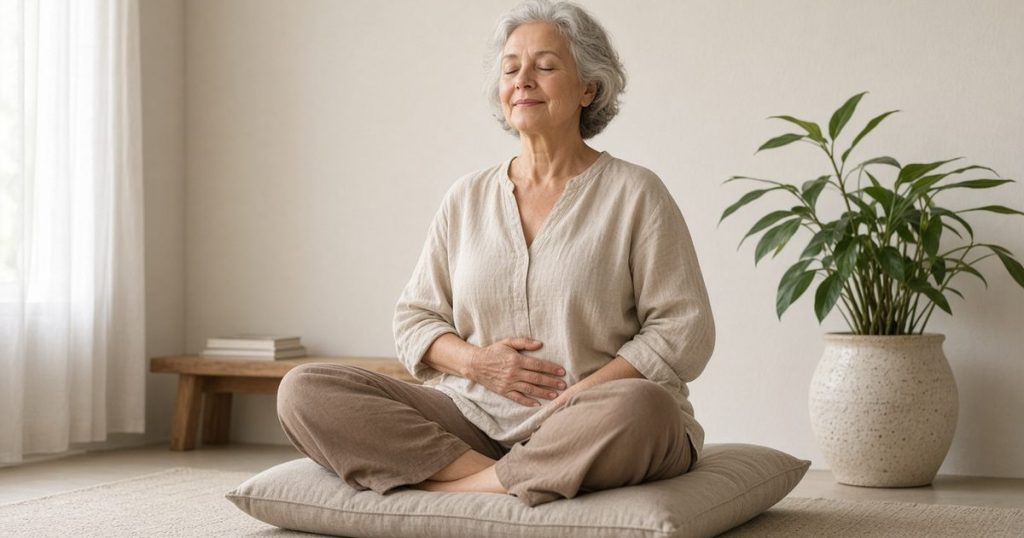
- Sit comfortably. A sturdy chair with your feet flat on the floor works well. Rest your hands on your lap.
- Sit tall but not stiff. Imagine a string gently lifting the top of your head.
- Keep it easy. Your breath should feel smooth, never strained. If you feel any discomfort, return to your normal breathing.
- Check in with your doctor first if you have asthma, COPD, a heart condition or another lung or heart concern.
A good rule: If a breathing practice makes you feel dizzy, anxious or short of breath, stop and breathe normally. You did nothing wrong. That practice simply is not right for you today.
Four gentle practices
1. Natural breath awareness (1 to 3 minutes)
The simplest practice is just noticing. Close your eyes or soften your gaze. Feel the air moving in and out through your nose. Notice where you feel the breath most: the nostrils, chest or belly. When your mind wanders, which it will, gently return your attention to the breath without scolding yourself.
2. Belly breathing (2 to 3 minutes)
Place one hand on your chest and one on your belly. Breathe in slowly through your nose, letting your belly rise gently under your hand. Breathe out slowly, feeling your belly soften. Aim for the chest hand to stay fairly still. This practice encourages relaxed, unhurried breathing.
3. Longer exhale (2 to 3 minutes)
Breathe in through your nose for a count of four. Breathe out gently through your nose or pursed lips for a count of six. Repeat. A slightly longer exhale is a calm, relaxing rhythm for many people. If six feels too long, try three in and five out. Keep it comfortable.
4. Box breathing (2 minutes)
Breathe in for a count of four. Hold gently for a count of four. Breathe out for four. Pause for four. Repeat. Keep the holds soft, not tense. If holding the breath feels uncomfortable or you have a heart condition or high blood pressure, skip the holds and just breathe in and out evenly.
Practices to skip unless guided
Some advanced breathing practices involve rapid breathing, forceful breathing or extended breath holds. These are not recommended for beginners, and they may not be appropriate for people with heart, lung or blood pressure conditions, or for anyone prone to dizziness. If you are curious, speak with your doctor and learn from a qualified instructor.
When to practice
Breathing exercises fit easily into daily life.
- In the morning, for a calm start before you pick up your phone or the news.
- Before a doctor appointment or a busy afternoon, to settle your nerves.
- At red lights or in waiting rooms, with your eyes open and your attention soft.
- Before bed, as part of an evening wind-down.
Making it a routine
Try this simple plan for one week:
- Day 1 to 2: One minute of natural breath awareness after breakfast.
- Day 3 to 4: Two minutes of belly breathing.
- Day 5 to 7: Three minutes of longer exhale breathing.
Notice how you feel afterward, without expecting a dramatic change. Often the benefits are quiet: perhaps a slightly softer jaw or looser shoulders.
Troubleshooting
- My mind keeps wandering. Everyone's does. Each time you notice and return, you are practicing.
- I feel more anxious when I focus on my breath. Open your eyes, focus on something outside like a plant, or try a walking meditation instead. Our mindfulness guide offers alternatives.
- I cannot breathe through my nose. Breathe through your mouth, or skip the practice that day.
- I feel lightheaded. Stop, breathe normally and rest.
When to speak with your doctor
If you have chronic breathlessness, chest discomfort, or unexplained fatigue, please speak with your doctor. If you experience severe shortness of breath, chest pain or fainting, call 911.
Combine breathing practice with gentle movement. Our chair yoga routine ends with a short resting breath that you can extend whenever you like.
This article is general educational information from the Sunlit Mat Living Editorial Team. It is not medical advice and is not a substitute for care from your doctor. See our Editorial Policy to learn how we research and update articles.