Sunlit Mat Living · sunlitmatliving.com · General education only, not medical advice.
Key takeaways
- Many communities offer low-cost yoga at senior centers, parks and recreation departments, libraries and YMCAs.
- Look for classes labeled gentle, chair, restorative or for older adults.
- Ask about teacher experience, class size and modifications before you sign up.
- Try a class once before committing, and leave if anything feels unsafe.
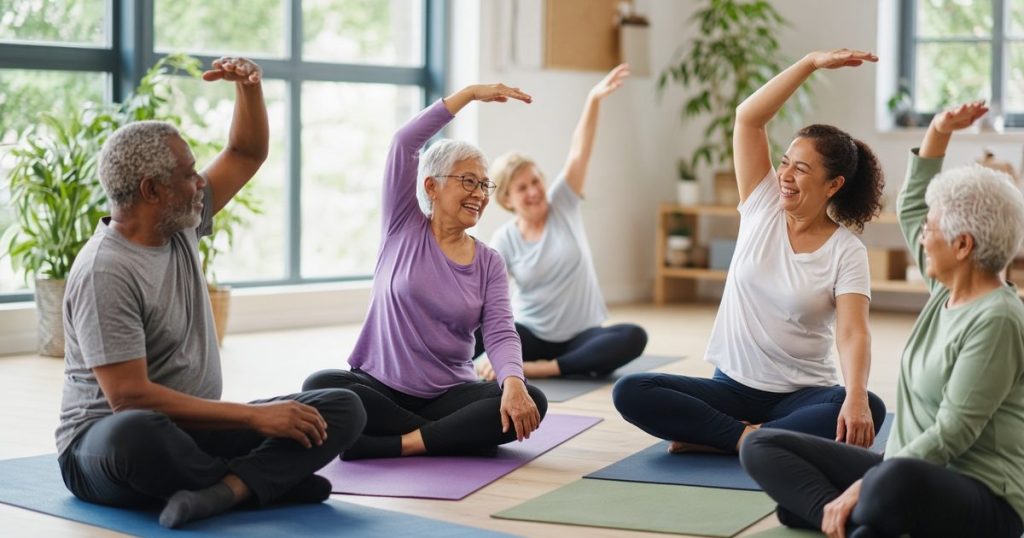
Practicing at home is wonderful, but many people enjoy the friendliness and guidance of a class. A good teacher can show you how to adjust poses, offer encouragement and notice details you might miss on your own. And there is something pleasant about practicing alongside others.
With so many options, how do you find a class that is safe, welcoming and right for you? This guide walks you through where to look, what to ask and how to try a class with confidence.
Where to look
Community and senior centers
Senior centers and community centers frequently offer chair yoga or gentle yoga, often at low or no cost. Your local Area Agency on Aging can point you toward programs. You can find yours through the Eldercare Locator, a public service of the U.S. Administration for Community Living, at eldercare.acl.gov or by calling 1-800-677-1116.
Parks and recreation departments
City and county recreation departments often host affordable classes, including gentle yoga for adults and older adults. Check seasonal program guides online or at the local recreation center.
Public libraries
Many libraries host wellness programs, including gentle yoga and meditation. Check your library's events calendar.
YMCAs and community fitness centers
YMCAs and similar organizations frequently offer older-adult fitness classes. Ask about day passes or a free trial.
Health insurance fitness programs
Some Medicare Advantage and Medicare Supplement plans include fitness benefits that cover gym memberships or group exercise classes. Contact your plan or visit its website to see what is offered. Programs vary and not every plan includes this benefit. We are not affiliated with any plan or program.
Houses of worship, hospitals and clinics
Some faith communities, hospitals and rehabilitation centers offer gentle movement classes. Ask at your local center or clinic.
Yoga studios
Many studios offer beginner-friendly or gentle classes. Look for descriptions like "gentle," "chair," "restorative," "slow flow for beginners" or "yoga for seniors."
Online classes
If travel is difficult, online classes can be convenient. Look for live-streamed classes with a teacher who can see and respond to you, or recorded classes designed for older adults. Make sure you have a clear space, a sturdy chair, and good lighting, and that the video is large enough for you to follow easily.
Class types decoded
- Chair yoga: Done seated or using a chair for support. Good for those who prefer to stay off the floor.
- Gentle yoga: Slow-paced, with simple poses and plenty of rest. Often includes a mix of floor and standing poses.
- Restorative yoga: Very slow, with props supporting you in restful positions.
- Yoga for older adults: Designed with common age-related considerations in mind.
- Vinyasa, power or hot yoga: Fast-paced, strenuous or heated. These are generally not recommended for beginners, so skip them unless you are experienced and have your doctor's blessing.
Questions to ask before you sign up
- Is this class suitable for beginners and for people over 60?
- How long have you been teaching, and have you taught older adults?
- What training does the teacher have? Many teachers complete a certification, such as a 200-hour yoga teacher training. Certification is not required by law, so ask about experience too.
- How large is the class? Smaller groups allow more individual attention.
- Are chairs, blocks and straps provided?
- Can I watch or try one class before committing?
- What is the cost, and what is the cancellation or refund policy?
- Is the building accessible, with easy parking, ramps and restrooms?
What a good class looks like
- The teacher asks about injuries or concerns at the start.
- Poses are demonstrated and options are offered, including chair versions.
- The pace is unhurried, with time to rest.
- The teacher reminds you to listen to your body and never push into pain.
- No one pressures you to do more than you want.
- The room is comfortable, uncluttered and has non-slip flooring.
Red flags
Consider choosing a different class if you notice:
- Pressure to go deeper or hold poses longer than feels right.
- Promises of cures, quick fixes or the ability to replace medical treatment.
- Lack of modifications or no attention to individual needs.
- A cluttered room, slippery floors or unsafe equipment.
- Pressure to buy expensive packages, supplements or products on the spot.
Your first class: what to bring
- A water bottle and a small towel.
- Comfortable clothing and a mat, if you have one. Ask whether mats are provided.
- A list of any health concerns you want the teacher to know about.
- Arrive 10 to 15 minutes early so you can introduce yourself and choose a spot near a wall or chair.
Let the teacher know about any conditions or concerns. Use props, take rests, and skip anything that does not feel right. It is perfectly fine to leave if you feel unwell or uncomfortable.
Before you go
Talk with your doctor before beginning a new class. Our pre-yoga checklist can help. If you would like a few weeks of practice at home first, try our beginner's guide and our chair yoga routine.
A good class feels like a warm welcome. Keep looking until you find one that does.
This article is general educational information from the Sunlit Mat Living Editorial Team. It is not medical advice and is not a substitute for care from your doctor. See our Editorial Policy to learn how we research and update articles.