Sunlit Mat Living · sunlitmatliving.com · General education only, not medical advice.
Key takeaways
- You do not need to be flexible, athletic or experienced to begin yoga.
- Start with short, slow sessions and use a chair or wall for support.
- Breathing comfortably matters more than how far you stretch.
- Check with your health care provider before beginning, and stop if anything hurts.
If you have ever watched a yoga video and thought, "I could never bend like that," you are in good company. Many people picture yoga as a pretzel-like contest for the young and flexible. In reality, yoga is a broad collection of gentle movements, breathing practices and moments of quiet that can be adjusted to nearly any body. This guide walks you through the basics so your first session feels welcoming rather than intimidating.
What yoga actually is
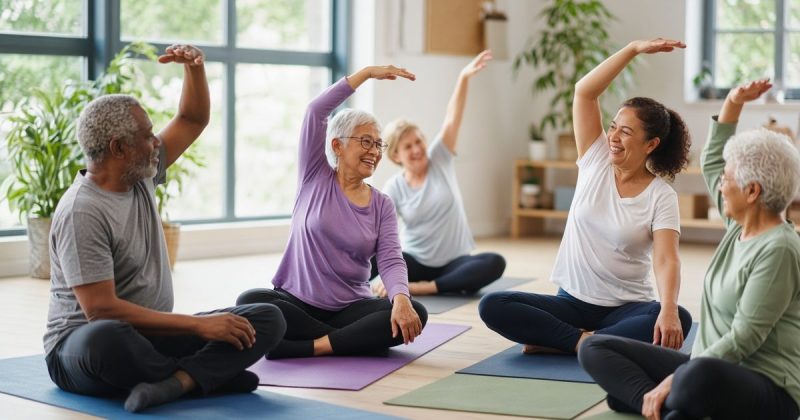
Yoga is a mind and body practice that began in India thousands of years ago. In the United States today, most classes combine three simple ingredients: slow physical postures (often called poses), steady breathing, and a few moments of relaxation or meditation.
According to the National Center for Complementary and Integrative Health, part of the National Institutes of Health, many people use yoga to support overall well-being, and research suggests it may help with stress management and general fitness. The research is still developing, so think of yoga as a pleasant, low-pressure way to move, not a guaranteed fix for anything.
Why many adults over 60 enjoy yoga
People often come to yoga for ordinary, everyday reasons:
- To feel less stiff when getting out of a chair, reaching a high shelf or bending to tie a shoe.
- To practice balance in a safe, supported setting.
- To slow down and take a few calm breaths in a busy day.
- To stay active in a way that is gentle on the joints.
The Centers for Disease Control and Prevention (CDC) recommends that adults 65 and older get regular aerobic activity, muscle-strengthening activity and balance activities each week. Gentle yoga can be one pleasant way to include the balance and flexibility portions of that mix, alongside walking and strength work.
Before you begin: a quick check-in
A short conversation with your doctor is the best first step, particularly if you have a heart condition, high blood pressure, osteoporosis, joint replacements, balance problems, or have recently had surgery or a fall. Our pre-yoga checklist can help you plan what to ask.
Good to know: Tell any instructor about your health conditions before class. A good teacher will happily offer modifications.
What you need (very little)
You can begin today with items you probably already own.
- A sturdy chair without wheels, placed against a wall so it cannot slide.
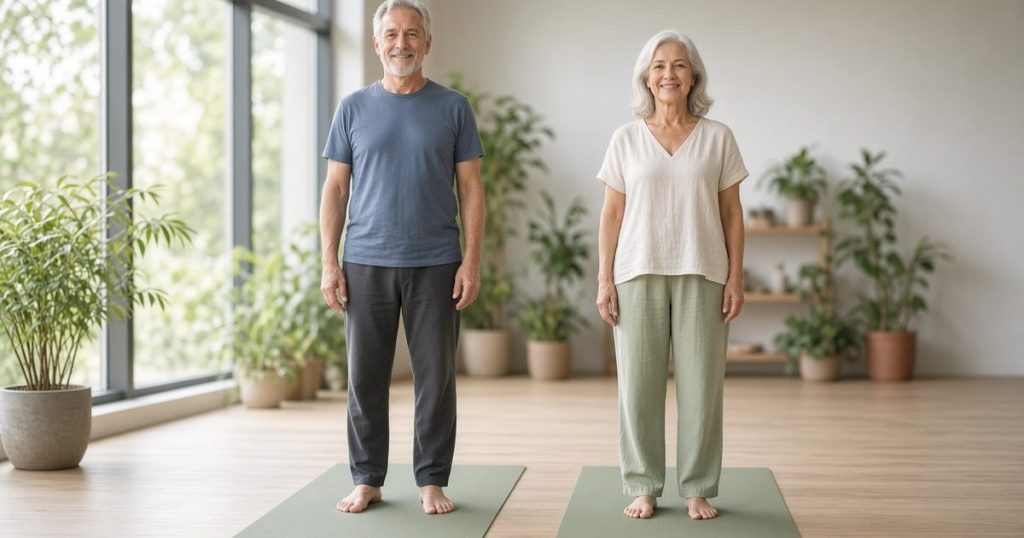
- Comfortable clothes that let you move, such as a loose T-shirt and stretchy pants. Avoid anything that bunches or restricts your breathing.
- A non-slip surface. Bare feet are fine on a mat or carpet. If floors are slippery, wear grippy socks or flat shoes with good traction.
- A folded towel or blanket for padding under your knees or behind your back.
- A glass of water nearby.
When you are ready for more, see our guides to choosing a yoga mat and using props.
Your first five minutes
Try this short, seated warm-up. You can do it in a kitchen chair.
- Sit tall. Sit toward the front of the chair with both feet flat on the floor, about hip-width apart. Rest your hands on your thighs.
- Breathe. Inhale slowly through your nose for a count of three or four. Exhale gently for a count of four or five. Repeat five times.
- Roll your shoulders. Lift your shoulders toward your ears, roll them back and down. Do this five times, then reverse.
- Turn your head. Slowly look over your right shoulder, then your left, only as far as is comfortable. Repeat three times each way.
- Reach. Interlace your fingers, turn your palms out and stretch your arms forward at shoulder height. Take three slow breaths.
That is a real yoga practice. You can stop here for today, or continue with our 12-minute chair yoga routine.
How it should feel
Yoga should feel like a gentle stretch or a mild warming of the muscles. It should never feel sharp, pinching, burning or painful. A simple rule: if you cannot breathe smoothly, you are going too far. Ease back until the breath is easy again.
Warning signs that mean you should stop and rest include dizziness, chest discomfort, shortness of breath, numbness or tingling, or pain in a joint. If symptoms are serious or do not pass quickly, seek medical help. In an emergency, call 911.
Common worries, answered
"I am not flexible." Flexibility is something yoga may help with, not a requirement for starting. Everyone begins where they are.
"I cannot get down to the floor." Then stay in a chair. A large share of beneficial yoga can be done seated or standing at a counter.
"I will look silly." Classes for older adults are full of people who felt the same way on day one. Most are far too busy concentrating on their own breathing to notice anyone else.
"I have a bad knee, hip or shoulder." Tell your health care provider and your teacher. Many poses can be changed or skipped.
Simple ground rules
- Move slowly. Rushing is the most common cause of discomfort.
- Keep one hand near something steady, such as a chair or counter, when you stand.
- Practice a little and often. Ten minutes a few days a week is a wonderful start.
- Skip any movement that does not feel right. Skipping is a skill, not a failure.
- End with a minute or two of quiet breathing.
Where to go from here
Once the first week feels comfortable, explore a gentle morning routine, try balance practices, or learn how to find a class near you. If yoga words are puzzling, our plain-English glossary will help.
The most important step is simply beginning. A little sunlight, a sturdy chair and a few slow breaths are all you need.
This article is general educational information from the Sunlit Mat Living Editorial Team. It is not medical advice and is not a substitute for care from your doctor. See our Editorial Policy to learn how we research and update articles.